LEGION GASPER
Give it a task. It splits that task into pieces, hands each piece to a specialized agent, runs them in parallel, and stitches the results back together. The captain handles the coordination — you don't.
DEMO × HEXA · Sri Lanka
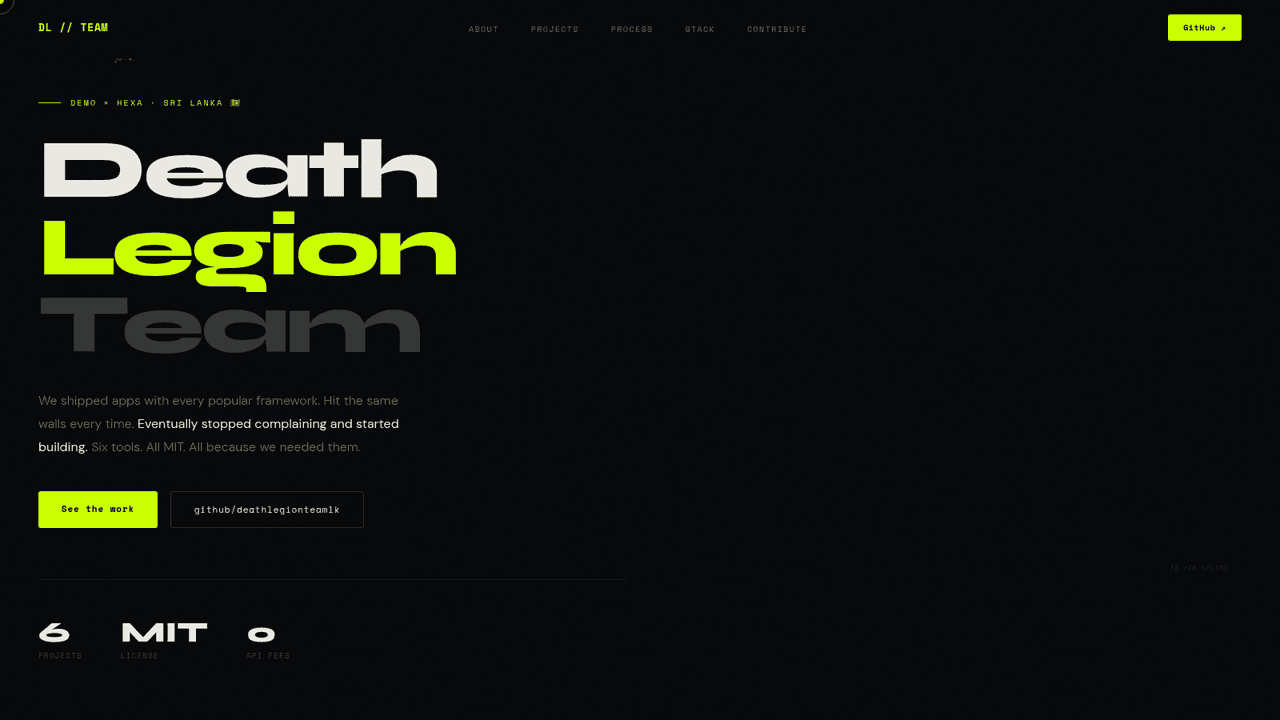
We shipped apps with every popular framework. Hit the same walls every time. Eventually stopped complaining and started building.
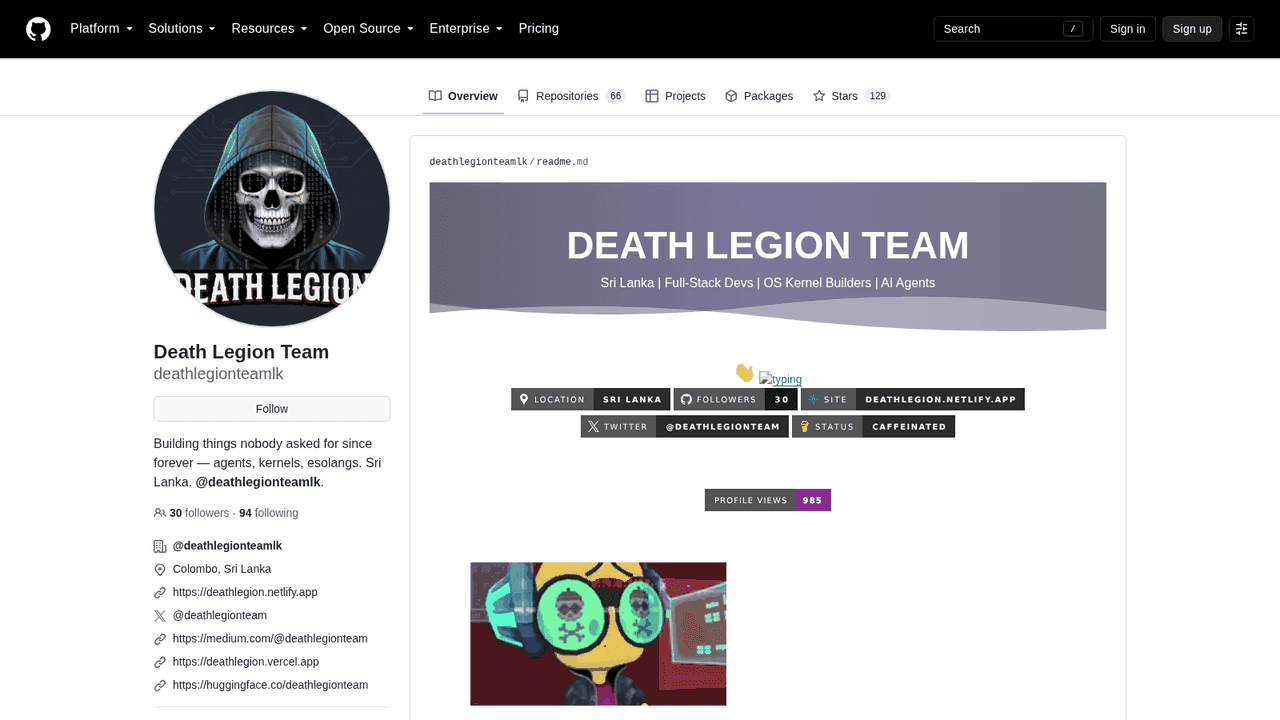
Six tools documented. 66 public repos on GitHub. All built in public.
01 — About
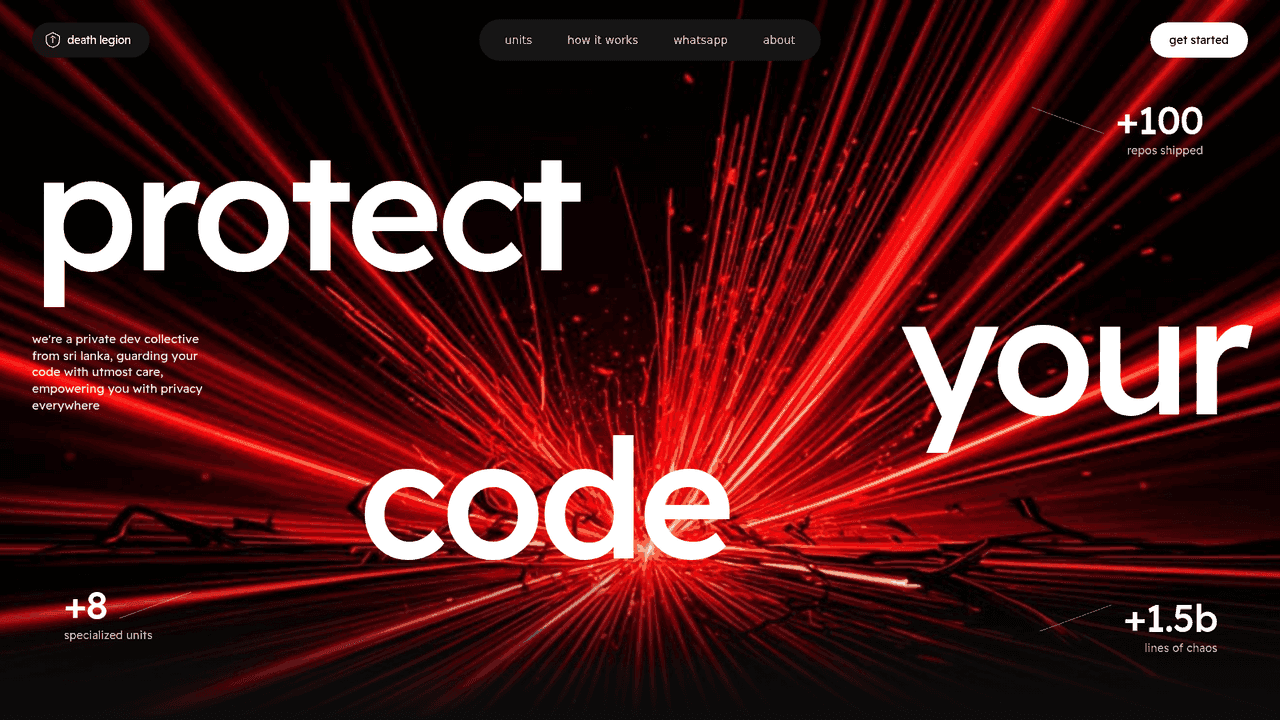
Death Legion Team is an open source group from Sri Lanka, operating as DEMO × HEXA. Six projects. Not trying to build an ecosystem or a brand. Just things we kept wishing someone had already made.
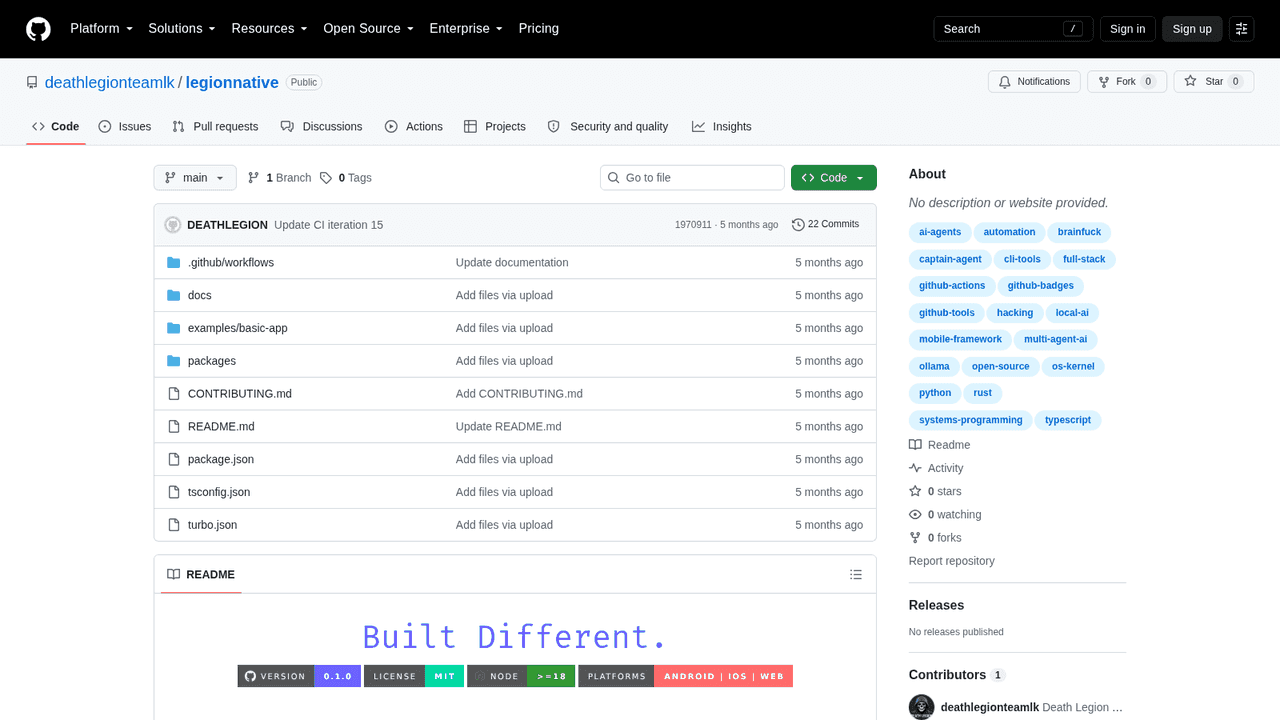
The mobile side started because we got tired of React Native and Expo lying to our faces. "Instant hot reload." We clocked it — three seconds on a mid-range Android. Bundles that somehow weighed 400KB more than the app deserved. So we built legionnative.
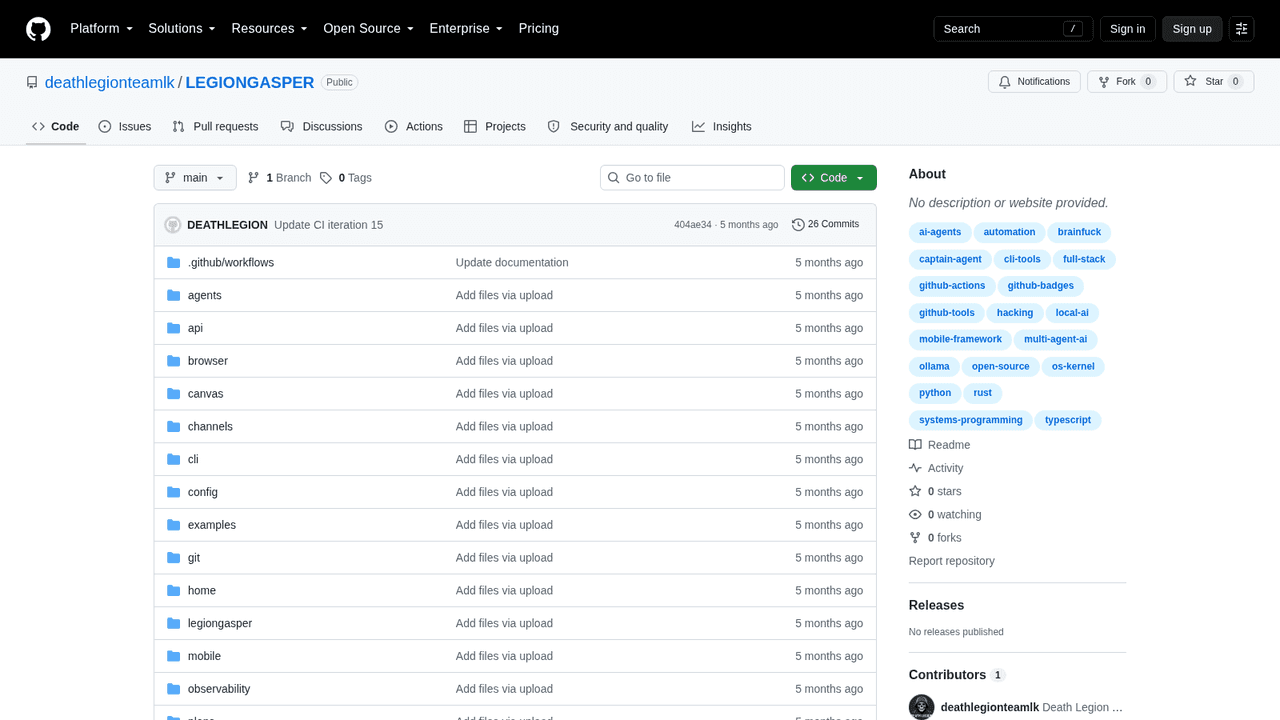
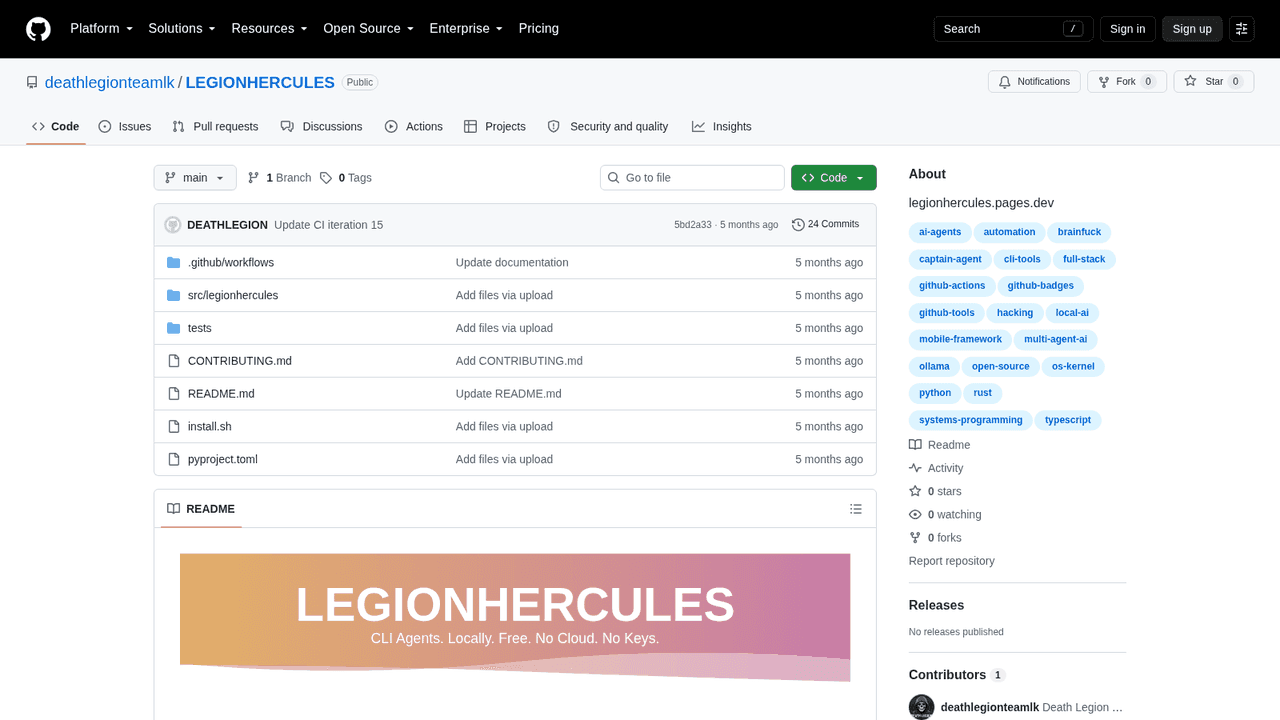
The AI side started for similar reasons. Every agent framework assumed you had a cloud budget and were fine with your data leaving the machine. LEGIONHERCULES fixes the local side — runs entirely on Ollama, free, forever, your hardware only. LEGIONGASPER handles the coordination problem — captain-agent pattern, parallel squads, five-layer memory — for when one model isn't enough.
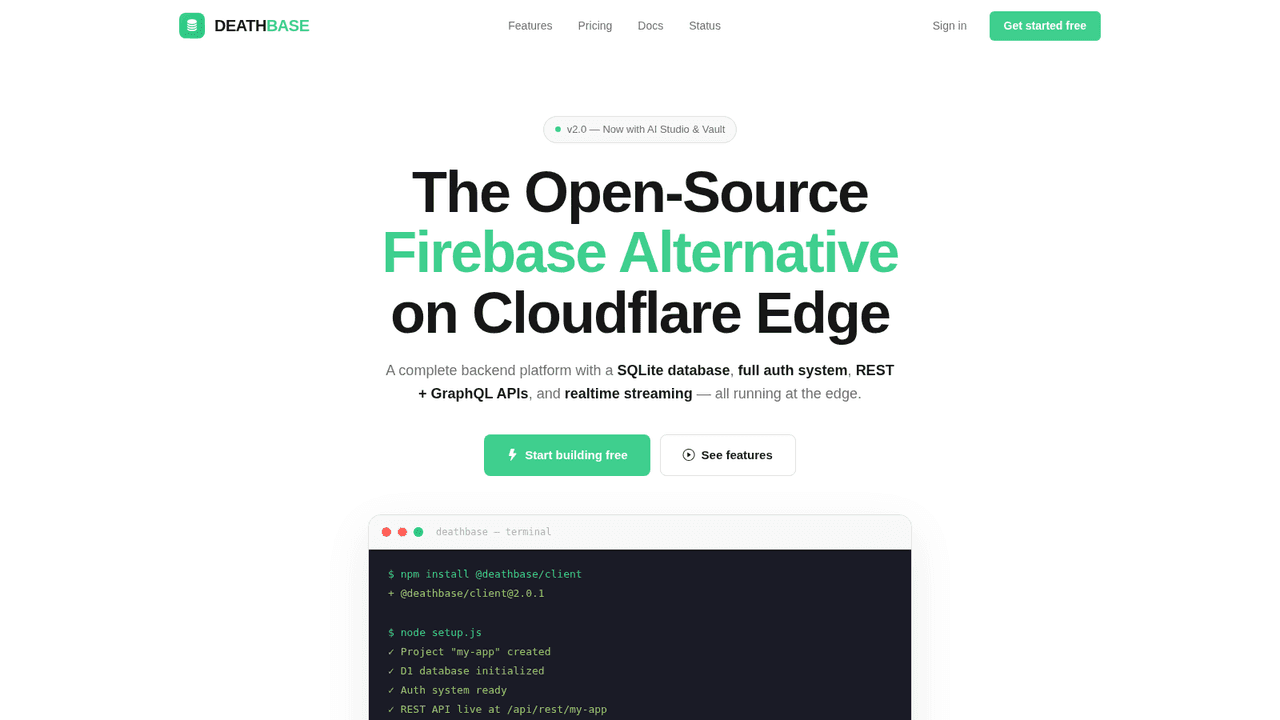
The infra side came next. Deploying things shouldn't require three cloud accounts and a devops person. DEATHBASE gives you a serverless database that doesn't need a dashboard to configure. legion-virtual handles isolated dev environments without the Docker ceremony. legion-cloud is the deploy layer — push, and it runs.
All six exist because we needed them. Which probably means someone else does too. PRs welcome. Bug reports with reproduction steps even more so.
02 — Projects
None of these started as portfolio pieces. They started as actual annoyance — working around the same walls until working around them stopped making sense.
Give it a task. It splits that task into pieces, hands each piece to a specialized agent, runs them in parallel, and stitches the results back together. The captain handles the coordination — you don't.
CLI agents that run 100% on your hardware via Ollama. No API key to generate, no billing page to visit, no usage cap to hit. Pull a model once — it stays on your machine.
Cross-platform mobile framework for Android, iOS and web — a TypeScript runtime with a Rust core for the parts where JS is genuinely slow. The repo's rule: numbers, not marketing.
The open-source Firebase alternative on Cloudflare's edge — SQLite database, full auth system, REST + GraphQL APIs and realtime streaming, all running at the edge. That's the live platform's own description, not ours.
As documented on the origin site: isolated dev environments without the Docker ceremony — describe what you need in plain text and it builds the workspace. This dossier is the archive record.
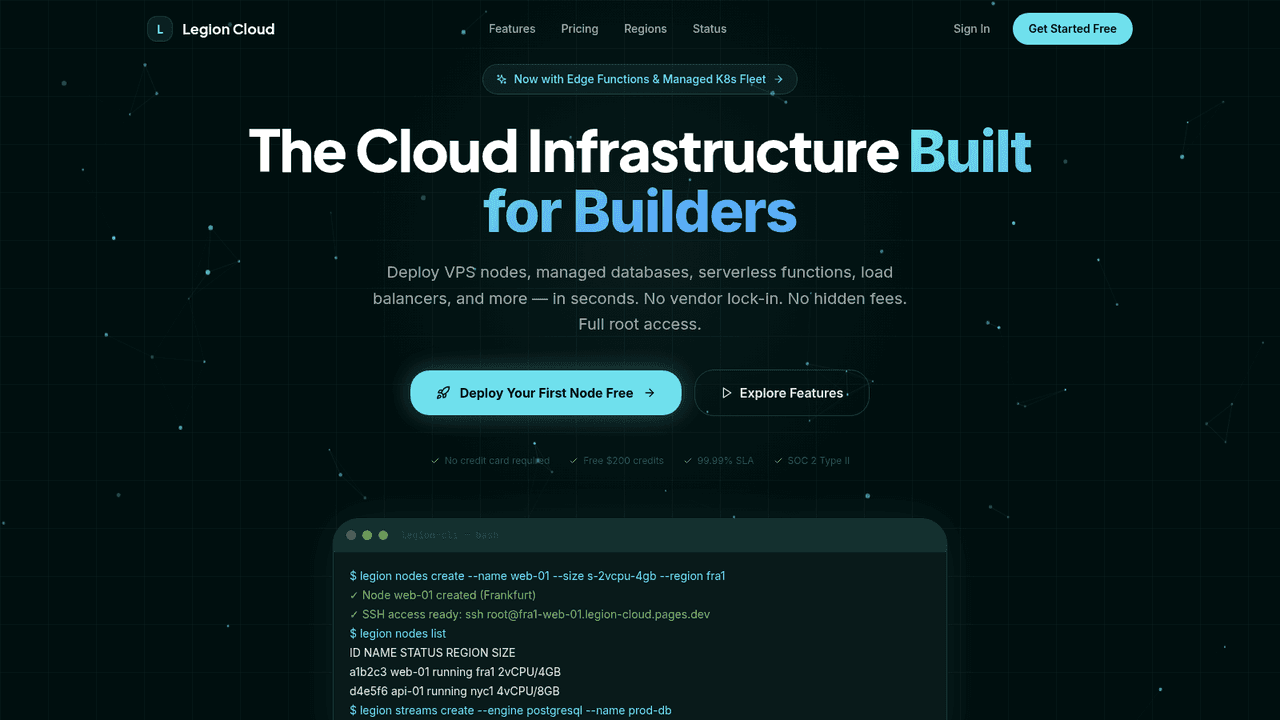
The live platform's own pitch: the cloud infrastructure built for builders — VPS nodes, managed databases, serverless functions and load balancers, in seconds. No vendor lock-in. Full root access.
03 — Process
Not a philosophy. Just what's held true across all six projects.
None of these projects started from a product brief. They started from a genuine annoyance — something we kept working around until working around it stopped making sense. Irritation is a better filter than market research.
All six repos are open from day one. Not "open source eventually." Open now — messy commits, half-finished features, honest changelogs. If you can see the work, you can judge the work. We prefer that.
All projects are MIT licensed. Fork them, modify them, use them commercially. We're not adding a "community edition" later or quietly changing the license. MIT means MIT.
04 — Tech Stack
Not aspirational. Not what we'd use if we started over. What's running right now.
05 — The network
The whole network in one place: live subdomains, deploy mirrors and public channels. Every node has its own SEO-indexed dossier — the whole network is crawlable, not just the front door.
06 — Try it live
Three of the six tools ship live demos, and the CLI docs are fully public. No signup — just open them.
We shipped apps with every popular framework. Hit the same walls every time. Eventually stopped complaining and started building.
Six tools. Built because we needed them. The repos that are still public are MIT — the dossier pages say exactly which.
Everything in public. If you can see the work, you can judge the work. We prefer that.
07 — The build
Nightly builds, honest changelogs, messy commits — the visible side of six tools shipping from Colombo.


08 — FAQ
The questions people actually ask — about the license, the local-first stance, and how to contribute.
DEMO × HEXA · Sri Lanka
The tools are MIT — take them, fork them, ship with them. Want to build them with the team instead? The door runs through the apply platform.
apply.deathlegion.site — the pipeline, the directory, the DL ID